Modern electric forklifts are not only capable of heavy-duty work but in many real-world applications they outperform diesel counterparts on cost, maintenance and site suitability.
If you’re weighing up electric vs diesel forklifts for demanding environments, this guide walks through the capabilities, limitations and practical considerations so you can decide with confidence.
Why the Comparison Between Electric vs Diesel Forklifts Matters
Historically, heavy-duty = diesel in people’s minds. Diesel engines have always delivered raw torque and long range, they’re useful for outdoor, around-the-clock operations. But battery and electric motor tech have advanced fast.
High-power lithium battery systems, stronger inverters, improved thermal management and application-specific electric designs mean electric forklifts now cover a far wider set of heavy use-cases.
Greenpower Forklifts specialises in commercial electric forklifts and equipment. Our experience with multi-directional and counterbalance machines shows electric platforms solving problems diesel couldn’t, especially where emissions, indoor use or low running cost matter.
How Do Electric Forklifts Deliver the Power You Need?
1. Instant torque and controlled power delivery
Electric motors produce maximum torque from zero rpm, ideal when you’re starting under load or moving heavy pallets. That translates to:
- Smoother starts and stops under heavy loads
- Better load control when lifting or placing awkward items
- Efficient regenerative braking that recovers energy on descents or lowering
2. Battery systems designed for heavy cycles
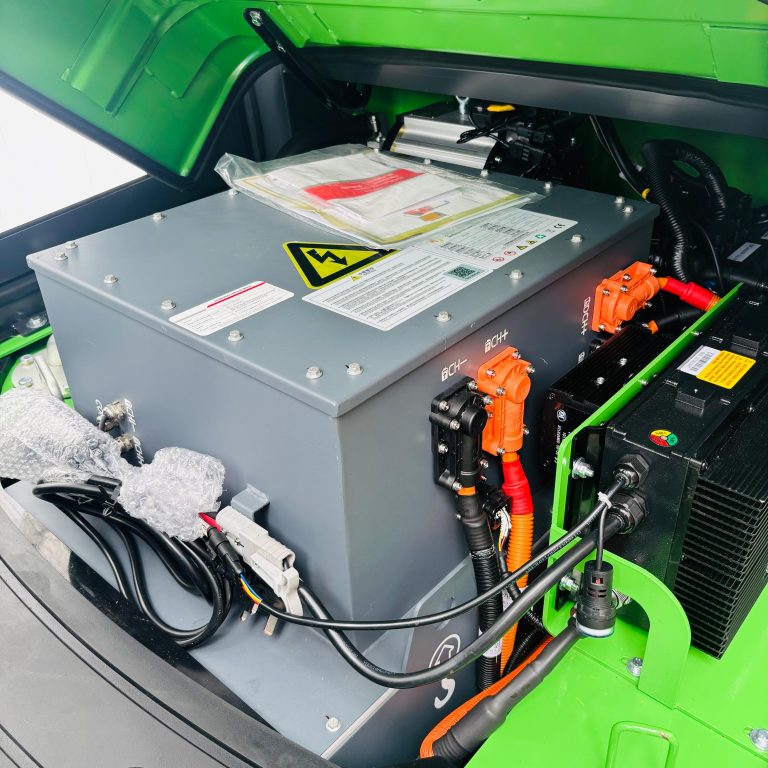
Modern heavy-duty electric forklifts use either advanced lead-acid with opportunity charging strategies or lithium-ion batteries which provide:
- Higher continuous discharge rates for demanding lifts
- Fast opportunity and rapid charging (reducing need for spare batteries)
- Better usable capacity at high loads and in cold conditions (depending on chemistry and management system)
3. Purpose-built electric platforms
Manufacturers now build heavy-duty electric platforms with:
- Reinforced chassis and heavy-duty mast assemblies
- Enhanced cooling for motors and controllers
- Hydraulics optimised for electric drivetrains
Quick Comparison: Electric vs Diesel Forklifts for Heavy-Duty Use
| Factor | Electric forklifts | Diesel forklifts |
| Peak torque | Instant torque at 0 RPM – excellent for starts under heavy loads | Strong torque curve but depends on revs |
| Continuous heavy lifting | Very capable with correct battery & cooling | Traditionally reliable for very long shifts |
| Running cost | Lower (electricity cheaper; fewer moving parts) | Higher (fuel + more maintenance) |
| Maintenance | Less frequent, simpler (motor, battery BMS) | More frequent (engine service, filters, emissions) |
| Emissions / indoor use | Zero local emissions, ideal for indoor/covered sites | Significant emissions, requires ventilation |
| Noise & operator comfort | Quiet, less vibration | Noisier, more vibration |
| Shift flexibility | With fast chargers or battery swap can match diesel availability | Excellent for very long continuous shifts without recharging |
Real-World Heavy-Duty Examples Where Electric Forklifts Succeed
- Warehouses with large loads – electric counterbalance trucks with high-capacity masts handle stacked steel or timber efficiently, while permitting indoor operation without extraction systems.
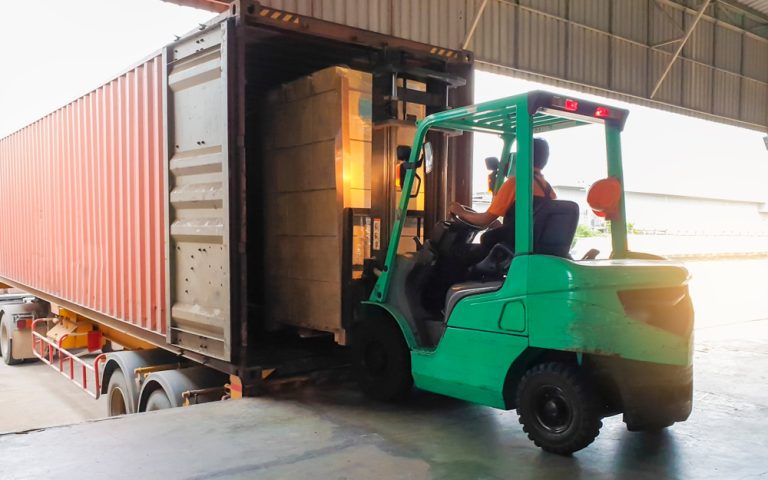
- Container yards (short moves) – electric multi-directional forklifts can move long loads between lanes with precision and lower site noise.
- Manufacturing lines (in-plant) – electrics reduce contamination risk, improve air quality and can be used close to production lines.
- Cold store / temperature-sensitive environments – electric units cope better with insulation requirements (and avoid diesel exhaust in cold stores).
What to Check When Specifying an Electric Heavy-Duty Forklift
To make sure an electric machine suits your heavy tasks, check these things:
- Rated lift capacity at required lift height – manufacturers must provide rated capacities at the specific mast height you use.
- Continuous discharge rating (C-rate) of the battery – ensures the battery can deliver the power needed for extended heavy lifts.
- Duty cycle and shift pattern – how many hours per shift and if opportunity charging is viable.
- Thermal management – good cooling for motors and batteries is essential under sustained heavy use.
- Attachment compatibility – clamps, rotators and specialised attachments must be electrically/hydraulically supported.
- Service & parts availability – downtime cost is significant, choose suppliers with local support.
Operational Tips to get the Best From Electric Heavy-Duty Trucks
- Use battery management systems (BMS) and predictable charging schedules to preserve battery life.
- Consider lithium-ion if you need high-power, short-recharge cycles and space-efficient energy.
- Plan for opportunity charging during breaks to reduce the need for spare batteries.
- Train operators on energy-efficient driving: controlled acceleration, avoiding unnecessary idling and using regenerative braking.
- Monitor telematics for real-time load, cycle and battery analytics — this identifies problems before they cause downtime.
Cost and Sustainability of Electric Forklifts
Although initial capital cost for heavy-duty electric forklifts can be higher, total cost of ownership (TCO) typically favours electric over 3-5 years due to:
- Lower fuel/energy costs per hour
- Reduced maintenance (no oil changes, fewer moving parts)
- Longer operating life for motors vs combustion engines in high-duty cycles
- Potential tax incentives, grants and lower site HVAC/ventilation expense
From a sustainability standpoint, electrics deliver immediate local air quality improvements and can be powered by on-site renewables to reduce lifecycle CO₂ substantially.
Shop the Best of the Best at Greenpower Forklifts
Electric forklifts are absolutely powerful enough for heavy-duty tasks, provided you choose the right machine, battery system and operational plan. For many businesses the benefits (lower running cost, reduced maintenance, better indoor air quality and quieter operation) make switching not just feasible but commercially attractive.
At Greenpower Forklifts we supply electric forklifts engineered for demanding applications. If you’re considering replacing diesel units or adding electric capability, our team can assess your site, duty cycles and attachment needs to recommend the optimum solution.
Contact Greenpower Forklifts to discuss real-world specs and get a tailored equipment plan.
FAQs
Can electric forklifts lift the same weight as diesel?
Yes, electric forklifts match diesel capacities when rated correctly, check the rated capacity at your required lift height.
Are lithium batteries necessary for heavy tasks?
Lithium forklift batteries give faster charging and higher power density, but advanced lead-acid with opportunity charging still works for some heavy use cases. Choose based on duty cycle and budget.
Can electric forklifts support near continuous 24/7 operations?
With fast charging, battery swapping or multiple trucks rotated across shifts, electric forklifts can support near-continuous operation. Evaluate charging logistics during specification.