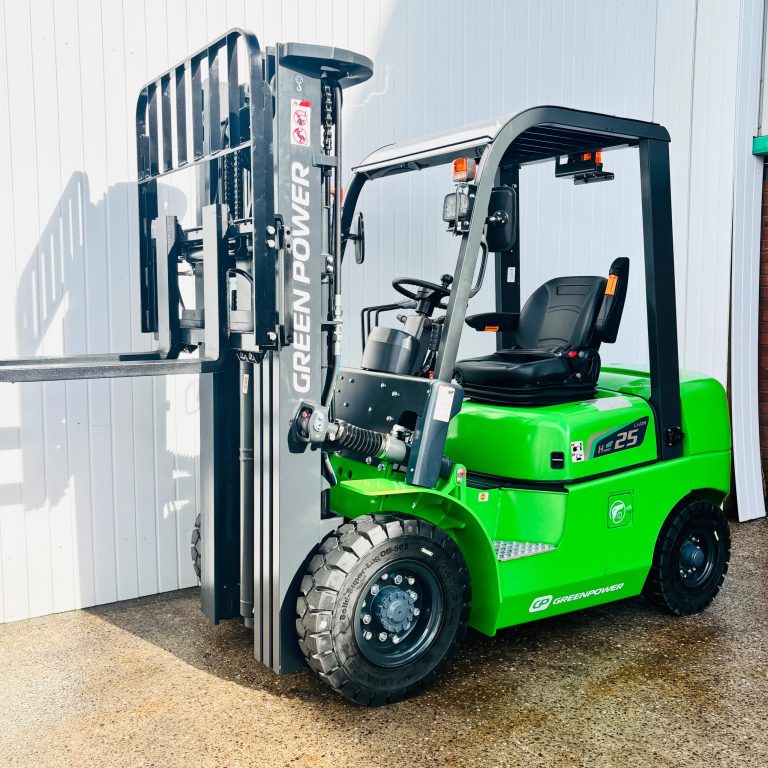
Choosing the right battery technology for your forklift fleet is no longer a simple cost-based decision. With lithium-ion forklifts rapidly becoming the standard across warehouses and factories, many businesses are asking the same question: lead acid vs lithium – which forklift battery is better?
Understanding Forklift Battery Differences
Before comparing the two, it’s important to understand how each battery type works in a real-world forklift environment.
How do Lead Acid Forklift Batteries Work?
Lead acid batteries have powered electric forklifts for decades. They rely on a chemical reaction between lead plates and sulphuric acid to produce energy. While proven and widely available, they do come with operational limitations that modern warehouses increasingly struggle to accommodate.
How do Lithium-Ion Forklift Batteries Work?
Lithium-ion batteries use advanced lithium chemistry to deliver consistent power, faster charging and higher energy efficiency. These batteries are now purpose-built for forklifts, not adapted from consumer electronics, making them ideal for demanding material handling operations.
Lead Acid vs Lithium Ion: Performance Comparison
When evaluating lead acid vs lithium ion, performance is the biggest differentiator.
Power Output & Consistency
Lead acid batteries gradually lose voltage as they discharge, meaning forklifts become slower and less responsive throughout a shift. This can be particularly noticeable in electric reach trucks and electric articulated forklifts, where consistent power is critical.
Lithium-ion batteries deliver full power from 100% to 0% charge, ensuring your forklift performs at the same level all day.
Winner: Lithium-ion
Charging Time & Opportunity Charging
Charging behaviour alone has led (excuse the pun) many businesses to switch from lead acid to lithium.
Lead Acid Battery: Charging Information
- Requires 6-8 hours to fully charge
- Needs an additional cooling period
- Cannot be opportunity charged without damaging battery life
- Often requires spare batteries and change-out rooms
Lithium Battery: Charging Information
- Fully charges in as little as 1-2 hours
- Can be opportunity charged during breaks
- No cooling period required
- Eliminates battery swapping entirely
Winner: Lithium-ion
Maintenance & Labour Requirements: Lead Acid vs Lithium-Ion
One of the biggest hidden costs in the lead acid battery vs lithium ion debate is ongoing maintenance.
Lead Acid Forklift Maintenance
Lead acid batteries require:
- Regular watering
- Acid level checks
- Ventilation for gas emissions
- Spill containment and safety procedures
- This maintenance adds labour costs, safety risks and downtime.
Lithium-Ion Forklift Maintenance
Lithium batteries are:
- Completely maintenance-free
- Sealed units with no fluids
- Safe for indoor charging
For busy warehouses and logistics centres, this simplicity is a major operational advantage.
Winner: Lithium-ion
Lifespan & Total Cost of Ownership: Lead Acid vs Lithium-Ion Batteries
At first glance, lead acid batteries appear cheaper. However, total cost of ownership tells a very different story.
Battery Lifespan Comparison
| Factor | Lead Acid | Lithium-Ion |
| Average charge cycles | 1,200-1,500 | 3,000-5,000 |
| Typical lifespan | 3-5 years | 8-10 years |
| Performance degradation | High | Minimal |
When factoring in replacement frequency, maintenance, downtime and energy inefficiency, lithium-ion often costs less over its lifetime.
So, which is better: lead acid battery or lithium battery? For most modern operations, lithium wins once again.
Energy Efficiency & Running Costs: Lead vs Lithium
Lithium-ion batteries are up to 30% more energy efficient than lead acid. This means:
- Lower electricity bills
- Faster charge cycles
- Less wasted energy as heat
For businesses running fleets of electric counterbalance forklifts or multi-directional forklifts, these savings quickly add up.
Comparing Safety: Lead Acid vs Lithium-Ion
Safety is a critical factor when comparing lithium ion forklift batteries vs lead acid.
Lead Acid Safety Risks
- Acid spills
- Hydrogen gas emissions
- Risk during battery change-outs
Lithium-Ion Safety Benefits
- No emissions or fumes
- No acid or corrosive liquids
- Integrated battery management systems (BMS)
Lithium batteries create a cleaner, safer working environment, especially important in food, pharmaceutical, and indoor warehousing sectors.
Environmental Impact & Sustainability of Lead Acid and Lithium-Ion Batteries
As the word shifts towards a greener future, sustainability is no longer optional for modern material handling operations. Compared to traditional lead acid batteries, lithium-ion forklift batteries consume significantly less energy, making them far more efficient to run over their lifetime.
They also produce zero emissions during use, helping to improve indoor air quality and reduce environmental impact within warehouses and distribution centres. With higher recyclability rates and a longer service life, lithium batteries generate less waste and require fewer replacements, further lowering their overall carbon footprint.
Is There Still a Place for Lead Acid Forklift Batteries?
While lithium-ion forklift batteries are clearly the superior choice for most modern operations, lead acid batteries can still have a place in certain limited scenarios. They may be suitable for very low-duty, single-shift applications or businesses working within strict upfront budget constraints.
However, as lithium battery technology becomes more affordable and widely adopted, these use cases are becoming increasingly rare. Businesses are already choosing to invest in lithium for its long-term performance and cost benefits.
Deciding Between Lead Acid vs Lithium Forklift Batteries
The conclusion is clear for most modern material handling operations. Lithium-Ion is the way forward, the better choice.
Lithium-ion forklift batteries offer:
- Longer lifespan
- Faster charging
- Zero maintenance
- Higher efficiency
- Improved safety
- Lower total cost of ownership
Why Choose Greenpower Forklifts?
At Greenpower Forklifts, we don’t just sell electric forklifts, we help businesses future-proof their material handling operations. We specialise in lithium-powered electric forklifts across a wide range of applications, including counterbalance, articulated, multi-directional, reach trucks, 3-wheel forklifts and electric pallet trucks.
If you’re considering the move from lead acid to lithium, speak to our team today. Our experts are on hand to help you make the switch with confidence and unlock the full benefits of lithium technology for your operation.